
Rifle Systems
Choose the Right System
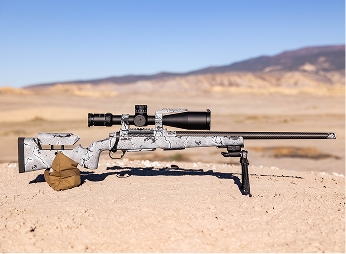
Scythian Hunter
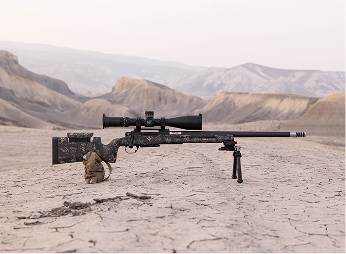
Nomad Hunter
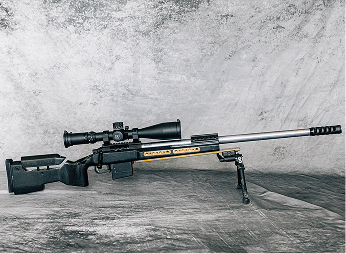
Bench Rifle
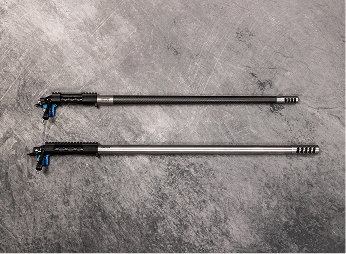
Barreled Action
Pre-fit Barrel
SCR rifle systems are not variations of the same build. Each system is a purpose-built configuration designed around a specific use case and a defined set of priorities.
Every decision within the system—action, barrel, stock, cartridge, and overall configuration—is made to support how the rifle will actually be used. The goal is not to build a rifle that performs well in theory, but one that delivers consistent, predictable results in real-world conditions.
No system excels at everything. Each is designed to balance trade-offs in a way that makes sense for its intended role. Understanding those trade-offs is what allows the correct system to be selected.
The sections below outline each rifle system, what it is designed to do, and why it exists. The goal is to help you identify which configuration best aligns with your intended use before moving forward with a build.
Scythian Hunter
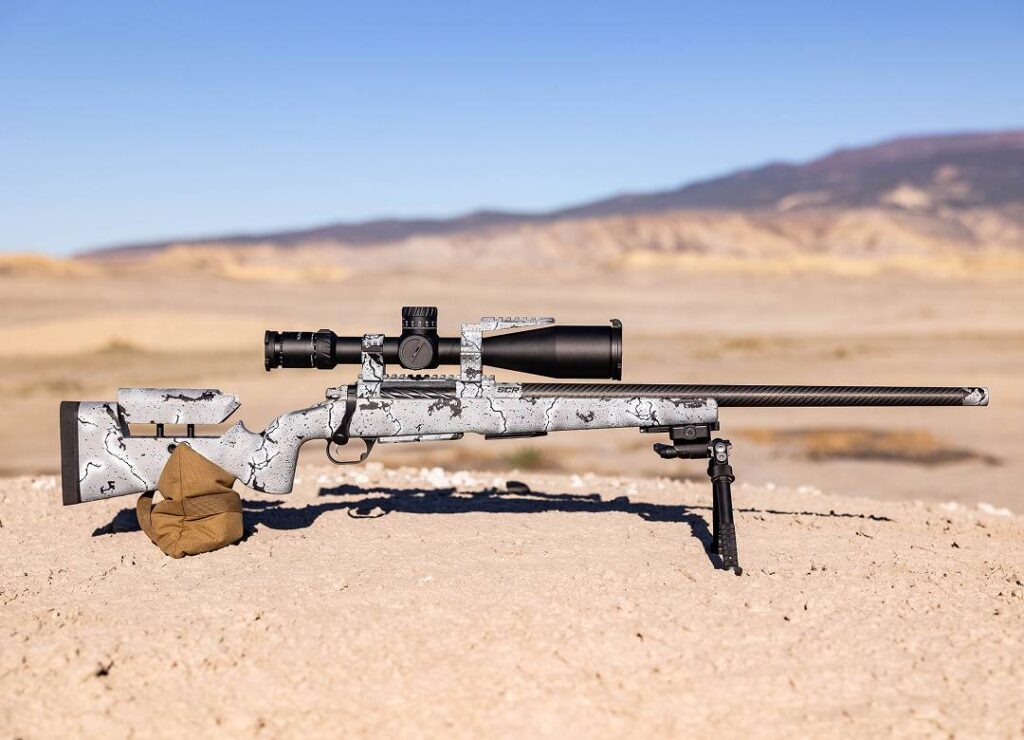
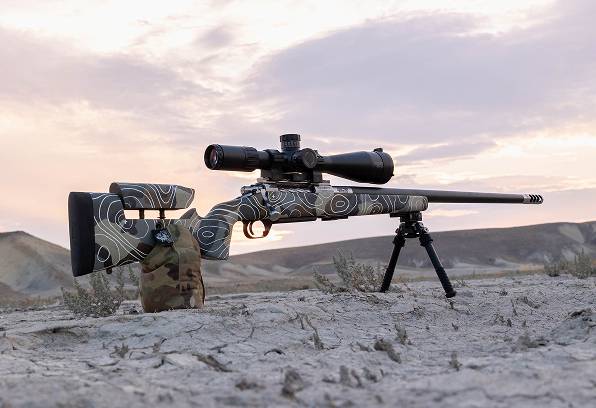
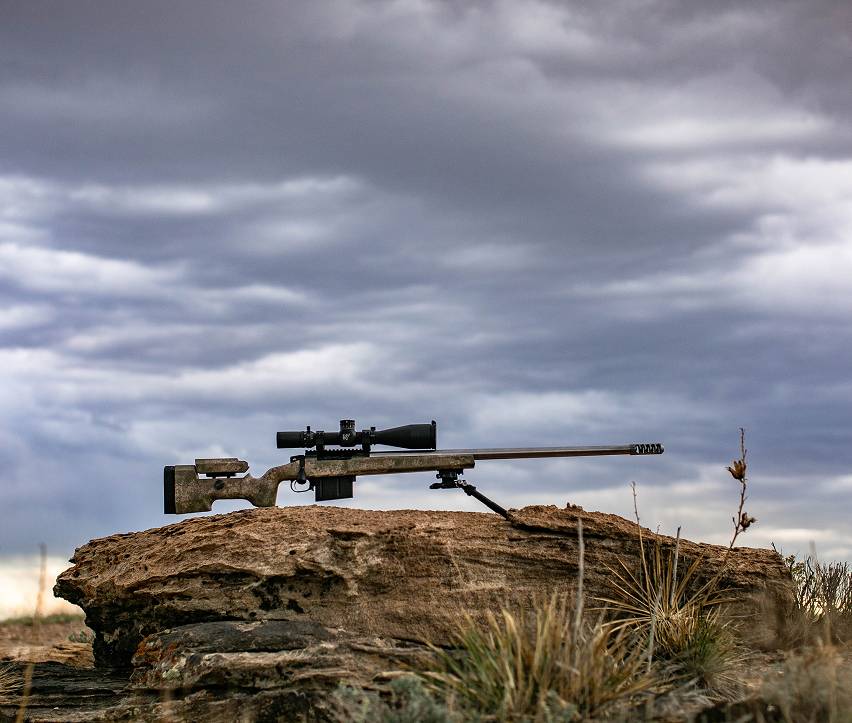
The Scythian Hunter is the primary rifle system SCR was designed to build. It represents the balance point between precision, shootability, and real-world usability in a hunting environment.
This system is built around the principle of maximizing consistency and control at distance while keeping the rifle practical to carry and use in the field. It is not a lightweight-first design, and it is not a bench-only platform. It exists to perform when conditions are less than ideal and the margin for error is small.
Purpose
The Scythian Hunter is designed for long-range hunting applications where predictability, recoil management, and the ability to spot impacts are critical.
It is built for the hunter who may not seek long shots, but is prepared for them when distance cannot be closed or time is limited. The goal is to provide a rifle that allows confident shot execution under real-world conditions.
Trade-Offs
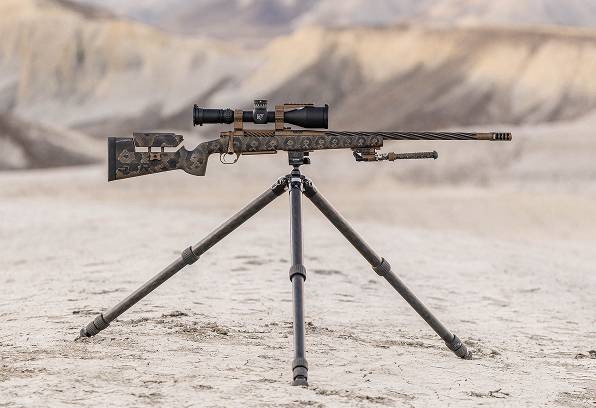
This system prioritizes shootability and stability over minimum weight.
Typical configurations fall within:
- 8.5–10 lbs without optic
- 10–11.5 lbs with optic.
This added weight improves recoil control, allows the rifle to track more predictably, and makes it easier for the shooter to remain behind the rifle through the shot. The trade-off is reduced portability compared to ultralight systems, particularly during extended carry.
The system can be configured with:
- Longer barrels and a muzzle brake for maximum recoil reduction and performance
- Shorter barrels with a suppressor for improved field usability
Each option shifts the balance of performance, but both are built around maintaining control and consistency.
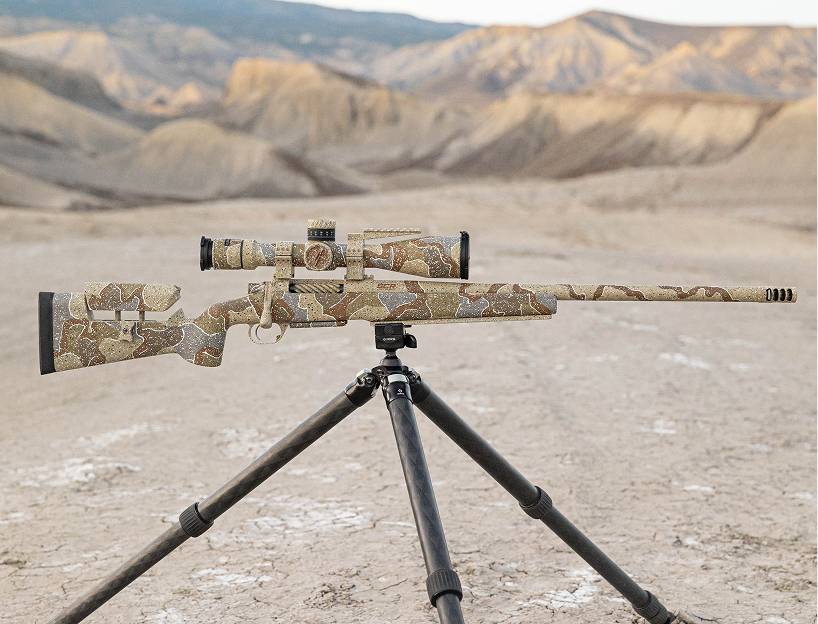
Each option shifts the balance of performance, but both are built around maintaining control and consistency.
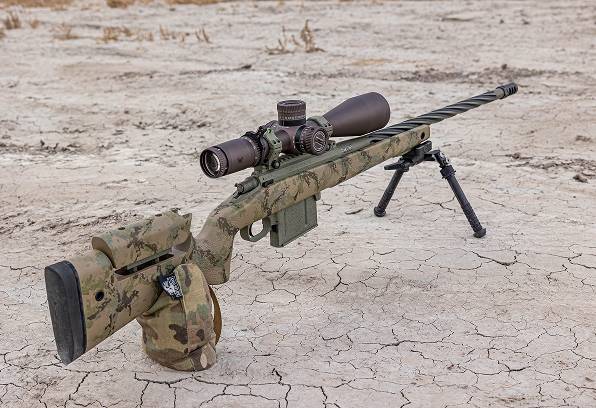
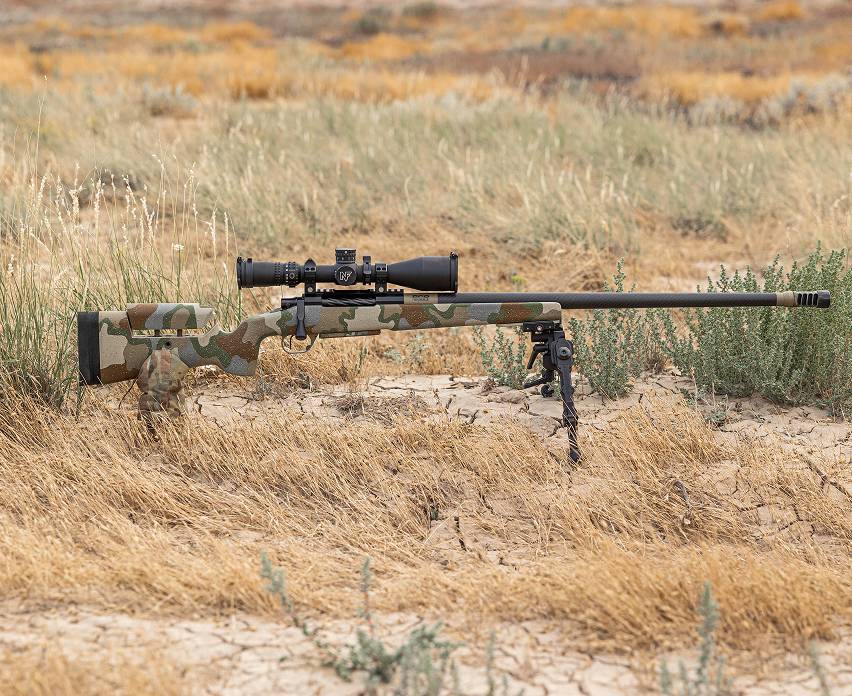
The system also prioritizes precise fit and adjustability. The Scythian Hunter uses a fully adjustable KMW cheek piece system that allows the shooter to refine both vertical and lateral position behind the optic. This level of adjustment makes it possible to establish a consistent, repeatable interface between the shooter and the rifle.
This is a key difference between this system and lighter-weight configurations. Simpler cheek systems reduce weight but limit how precisely the rifle can be fitted to the shooter. In this system, the added structure and adjustability contribute directly to stability, alignment, and the ability to execute consistent shots at distance.
This system is commonly paired with higher-performance cartridges like 7 PRC and 300 PRC magnums and similar wildcats. These cartridges provide the velocity, ballistic efficiency, and terminal performance needed at extended distances. The added recoil they produce is intentional—this system is designed to manage it, allowing the shooter to stay in control, observe impacts, and make corrections when necessary.
Why It Exists
The Scythian Hunter exists because most hunting rifles are built with weight as the primary priority, often at the expense of shootability and consistency.
This system was designed from the ground up to reverse that priority. Instead of asking how light a rifle can be made, it asks how much stability is required to consistently make difficult shots under real-world conditions.
The stock geometry, weight distribution, and overall system configuration are built to track straight under recoil, maintain alignment with the optic, and allow the shooter to observe impacts and make corrections when necessary.
This is a system designed for confidence. When the opportunity presents itself, the rifle behaves predictably, and the shooter is able to execute without fighting the equipment.
For hunters who expect to make shots at extended distances and want a system they can trust when it matters, this is the rifle build for you.
Nomad Hunter
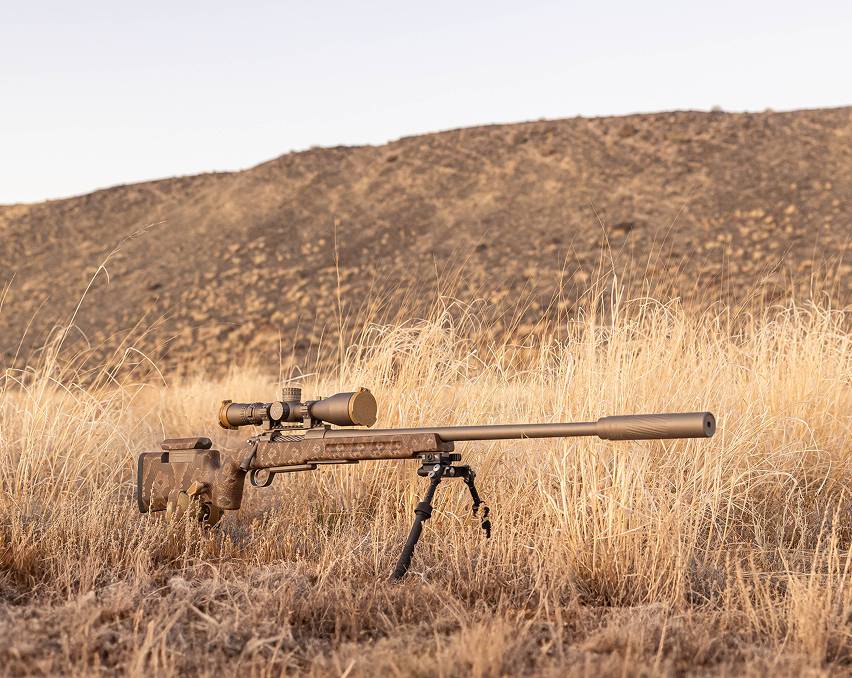
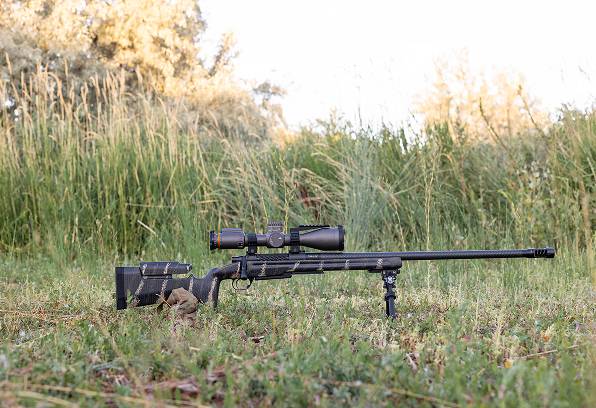
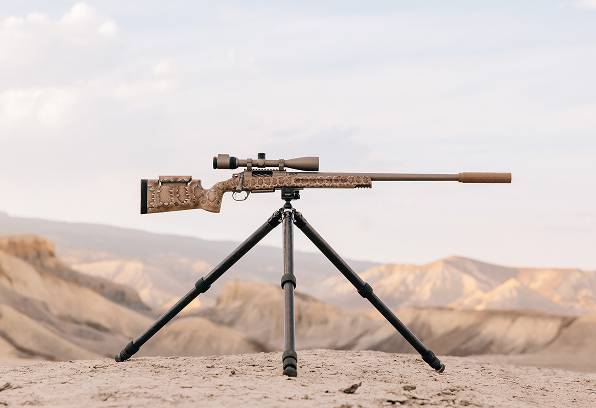
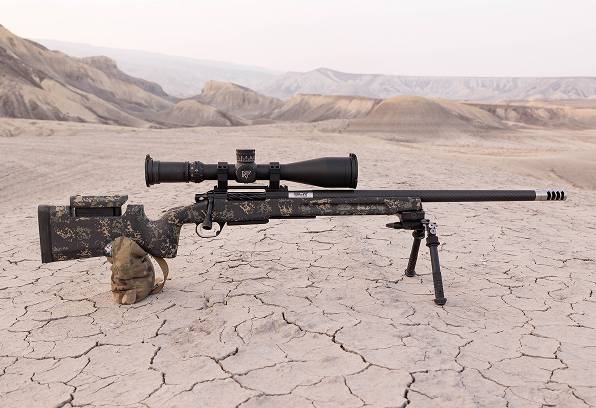
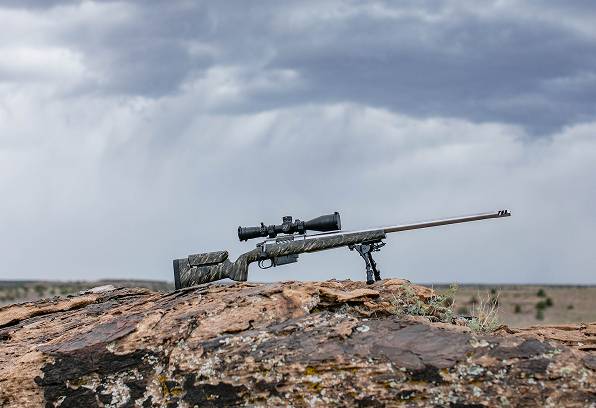
The Nomad Hunter is designed for shooters who prioritize weight savings, but still require a rifle that is stable and predictable in the field. It represents a balanced approach between lightweight carry and practical shootability.
This system is not built to be ultralight. Instead, it focuses on reducing weight while maintaining enough stability and control to perform reliably when a shot presents itself under real-world conditions.
Purpose
The Nomad Hunter is built for hunters who spend significant time covering ground and need a rifle that is easier to carry without giving up too much in terms of performance.
It is intended for scenarios where mobility matters, but the rifle must still be capable of delivering consistent results at moderate to extended hunting distances. In most cases, this system is well suited for engagements in the 600–800 yard range.
Trade-Offs
This system balances weight, recoil, and shootability rather than maximizing any single factor.
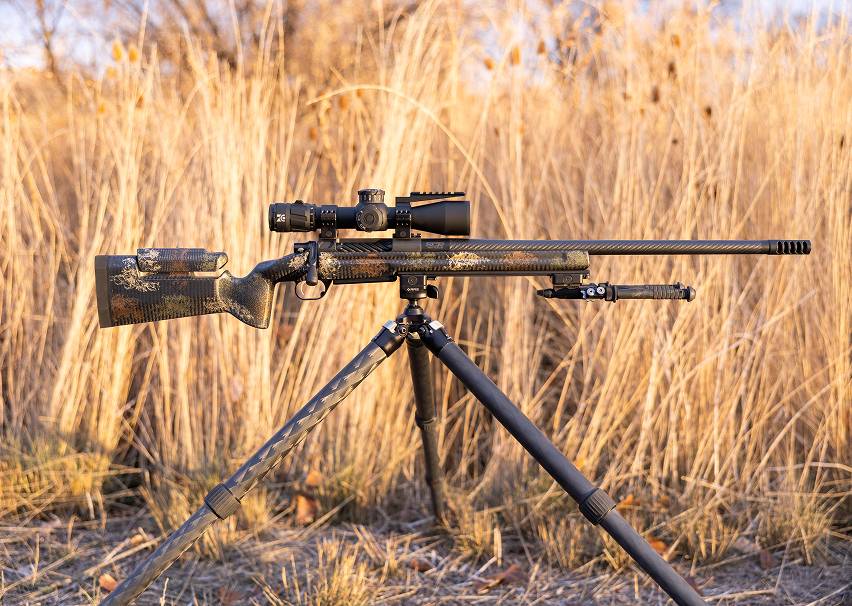
Typical configurations use lighter stock designs such as the McMillan ELR Hunter or Manners LRH. These stocks provide basic adjustability through vertical cheek height adjustment, while reducing overall weight by using simpler hardware and lighter construction. Compared to fully adjustable systems, this approach sacrifices some precision in fit and fine-tuning in exchange for reduced weight.
The lighter construction and hollow buttstock design also affect how the rifle balances and tracks under recoil. While still effective, the system does not provide the same level of recoil control or feedback as heavier platforms.
Typical configurations fall within:
- 7–8.5 lbs without optic
- 9–10.5 lbs with optic
Cartridge selection is typically scaled to match the lighter weight system. Medium-sized cartridges like 6.5 PRC through 7 SAUM (and similar wildcats) are often used to keep recoil manageable, allowing the rifle to remain practical and controllable despite the reduced weight. Barrel length and suppressor use are also commonly adjusted to improve maneuverability in tight terrain, vehicles, or blinds.
Why It Exists
The Nomad Hunter exists because not every hunting scenario allows for a heavier, stability-focused system. Long hikes, elevation gain, and extended time in the field require a rifle that is easier to carry while still maintaining a usable level of performance.
This system is built to strike that balance. It retains enough geometry and structure to remain forgiving compared to ultralight rifles, while reducing weight to a level that makes extended carry more practical.
It is a deliberate compromise. Compared to heavier systems, it gives up some recoil control and long-range forgiveness. Compared to ultralight sheep rifles, it maintains a higher level of stability and consistency.
The result is a system that works within real-world constraints. It allows the shooter to move efficiently in the field while still having the capability to execute a shot when the opportunity presents itself.
For hunters who need to cover ground and still retain practical shootability when the shot presents itself, this system is built to balance both.
Bench Rifle
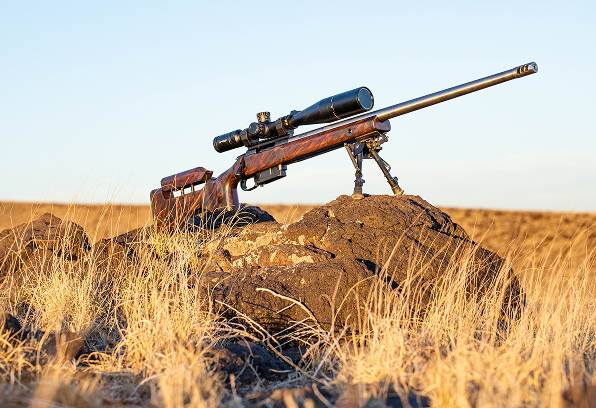
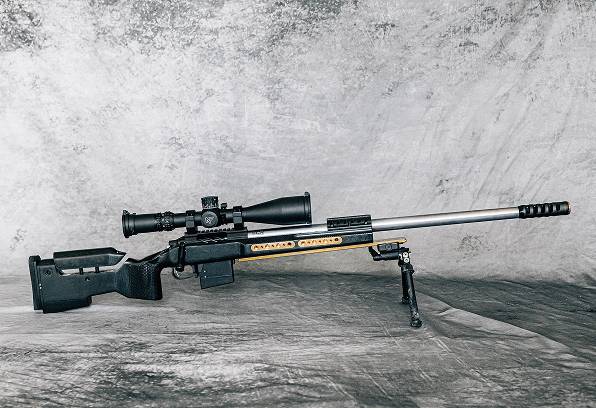
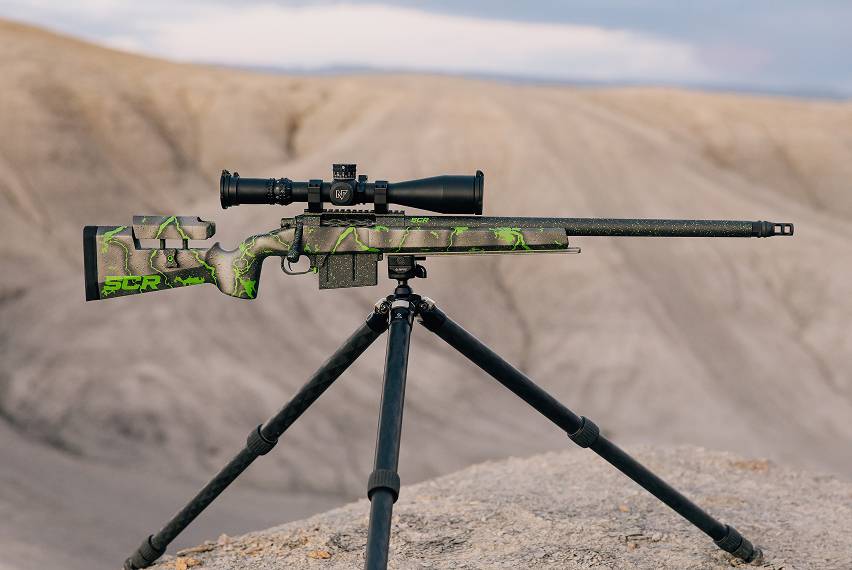
The Precision Bench Rifle is built for maximum stability and repeatable performance in controlled shooting environments. It prioritizes weight, balance, and recoil management above all else, creating a platform that is designed to perform consistently under high-volume or precision-focused shooting.
This system is not intended for mobility or field carry. It exists to provide the most stable and predictable shooting platform possible when the rifle is supported and portability is not a high priority.
Purpose
The Precision Bench System is designed for applications such as PRS-style competition, bench shooting, steel targets, and varmint shooting where the rifle is used from supported positions.
Its primary purpose is to minimize shooter input and maximize repeatability. By reducing movement under recoil and increasing stability, the system allows for consistent shot execution and easier impact observation over extended shooting sessions.
Trade-Offs
This system prioritizes stability and shootability over weight and portability.
Heavier stocks, longer barrels, and full adjustability are used to create a platform that remains stable under recoil and tracks consistently from shot to shot. The added mass reduces movement, improves feedback, and makes it easier for the shooter to stay behind the rifle and make corrections.
Full adjustability is a key component of this system. Cheek height, length of pull, and overall fit can be refined to match the shooter precisely, allowing for a consistent interface and repeatable shooting position.
The trade-off is weight and practicality outside of controlled environments. These rifles are not intended to be carried long distances or used in mobile scenarios. They are tools designed for stability, not convenience.
Cartridge selection in this system is far less restrictive than in lighter configurations. Because of the added weight and stability, the rifle is capable of managing a wide range of cartridges while still remaining controllable under recoil. This allows the system to take advantage of higher-performance cartridges without sacrificing shootability.
Typical configurations in this category range from approximately 12 to 30 pounds, depending on the shooter’s preferences and intended use. As weight increases, recoil becomes easier to manage and the rifle tracks more predictably, allowing the shooter to stay on target and observe impacts more consistently. This opens up cartridge options that would be difficult to control in lighter systems.
The trade-off is practical use outside of supported shooting environments. While the system can accommodate a wide range of cartridges, its size and weight limit where it can realistically be used. The advantage is not in choosing a specific cartridge, but in having the stability required to make nearly any appropriate cartridge manageable and repeatable.
Why It Exists
The Precision Bench System exists because maximum performance requires a platform that removes as many variables as possible. In controlled environments, where mobility is not a constraint, stability becomes the dominant factor in performance.
This system is built to eliminate unnecessary movement, reduce the effects of recoil, and allow the shooter to focus on execution rather than managing the rifle. It is designed to perform consistently over long shooting sessions and provide reliable feedback for corrections.
While lighter systems must balance competing priorities, the Precision Bench System is free to optimize for stability alone. The result is a platform that is easier to shoot, more forgiving, and capable of delivering consistent results at a high level.
For shooters who prioritize maximum stability, repeatability, and control in supported shooting environments, this system is built to deliver consistent results.
Barreled Actions
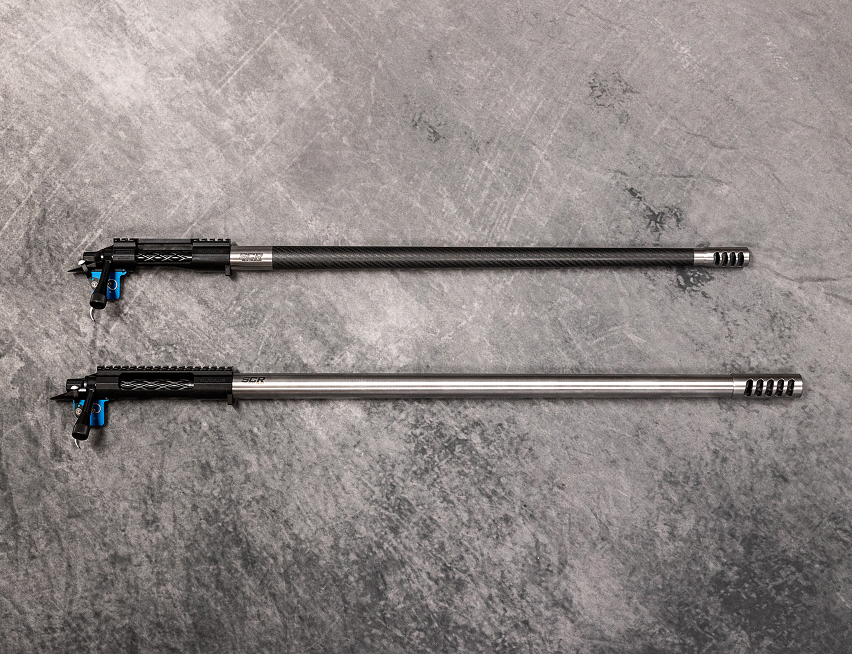
The Barreled Action option exists for shooters who want the core mechanical performance of an SCR build, but prefer to configure the rest of the system themselves. It provides a tuned action and chambered barrel foundation that can be integrated into a stock or chassis of the shooter’s choosing.
This approach focuses on the components that most directly influence performance—action function and barrel behavior—while leaving the final configuration open. It is a practical solution for shooters who already own a stock or chassis, have specific preferences outside of standard SCR configurations, or are working within a more limited budget.
Purpose
The Barreled Action is designed to deliver a high-performance foundation for a rifle system without requiring a complete build.
It allows the shooter to benefit from a properly set up action and precision chambering while retaining flexibility in how the rest of the rifle is configured. This makes it a viable option for those who want to build their own system around a known, consistent core.
Trade-Offs
This option prioritizes flexibility and cost control over a fully integrated system.
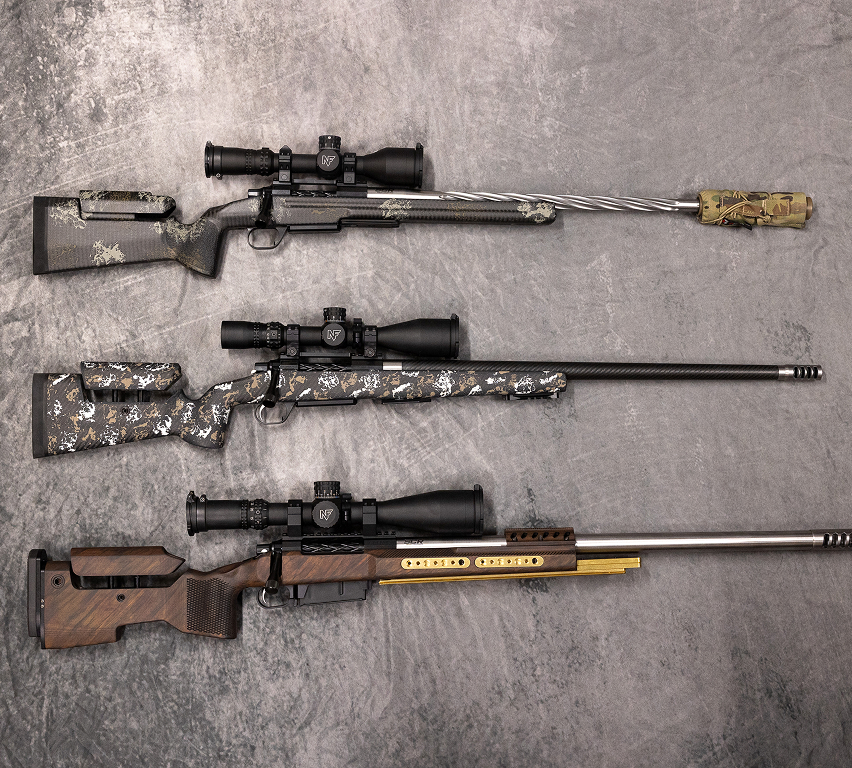
Because the stock or chassis is selected and assembled outside of the SCR build process, the final performance of the rifle depends on how well the remaining components are fitted and aligned. Small details in fitment, support, and overall assembly have a direct impact on how the system behaves, and when those details are not controlled, performance can be left unrealized.
Barreled actions can be configured across a wide range of setups, including carbon or steel barrels, different barrel lengths, and various muzzle device options. Action weight and configuration can also be tailored to the intended use. This flexibility allows the system to be adapted, but it also places more responsibility on the final assembly.
One of the primary trade-offs of this approach is that it does not include the final integration and inspection of the completed system. The tuning, fitment, and assembly of the remaining components are left to the shooter or another builder. While the core system is built to a high standard, the final performance result is still dependent on how the rifle is completed.
Why It Exists
The Barreled Action exists to provide access to the most critical aspects of rifle performance without requiring a full system build.
Not every shooter wants—or needs—a complete rifle configured to SCR standards. Some already own components they prefer to use, while others are focused on improving performance within a specific budget. This option allows those shooters to start with a properly built core and build the rest of the system around it.
It also provides a path for existing rifles or actions to be upgraded. Your existing action can be evaluated and refined, and barrels can be chambered to match the intended use, allowing the system to perform more predictably than it would in its original configuration.
The result is a flexible starting point. When the entire system is assembled with the same level of attention to detail, it can perform at a high level. When those details are overlooked, it reinforces the importance of the system as a whole.
For shooters who want a high-performance foundation while maintaining control over the rest of the system, this option provides the starting point.
Pre-Fit Barrels
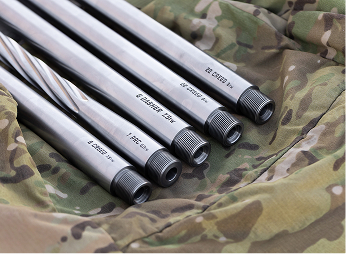
The Pre-Fit Barrel option is designed for shooters who need a replacement barrel or want to update an existing rifle system without going through a complete rebuild. It is most commonly used by customers who already have a functioning rifle and are looking to restore performance after a barrel has worn out or to change to a different cartridge.
This approach focuses on providing a properly chambered and fitted barrel that can be installed onto a compatible action with minimal additional work. It is a practical solution for maintaining or extending the life of an existing system, especially when the rest of the rifle is already set up and performing adequately.

Purpose
The Pre-Fit Barrel is intended to provide a straightforward way to replace or update a barrel while keeping the rest of the rifle intact.
It allows shooters to continue using a system they are familiar with while restoring performance or adapting to a new cartridge. For existing SCR customers, it provides a direct path to maintain consistency across multiple barrels as the system evolves over time.
Trade-Offs
This option prioritizes simplicity and cost over complete system optimization.
A pre-fit barrel is installed onto an existing action without addressing the internal characteristics of that action. If the action has not been evaluated or refined, any inconsistencies in ignition, timing, or alignment remain part of the system. As a result, there may be performance potential that is not fully realized.
While a properly chambered barrel can improve accuracy and restore function, it does not fundamentally change how the underlying system behaves. The final performance will always depend on the condition and consistency of the action and the rest of the rifle it is paired with.
Why It Exists
The Pre-Fit Barrel exists because not every situation requires a full system build.
Some shooters are maintaining an existing rifle, working within a budget, or simply looking for a practical way to replace a worn component. This option provides a clean and efficient way to do that while still benefiting from precise chambering and proper barrel configuration.
It is also a natural continuation for rifles that have already been built and proven. As barrels wear out over time, replacing them becomes part of maintaining the system. In these cases, a pre-fit solution allows the rifle to remain in use without unnecessary complexity.
The result is a simple, effective option for keeping a rifle running. When used within its intended purpose, it provides solid performance. When compared to a fully integrated system, it highlights the importance of controlling every part of the build when maximum consistency is the goal.
For shooters who need a practical and efficient way to maintain or update an existing rifle, this option provides a simple path forward.